Dispatches from my media diary: Possession edition

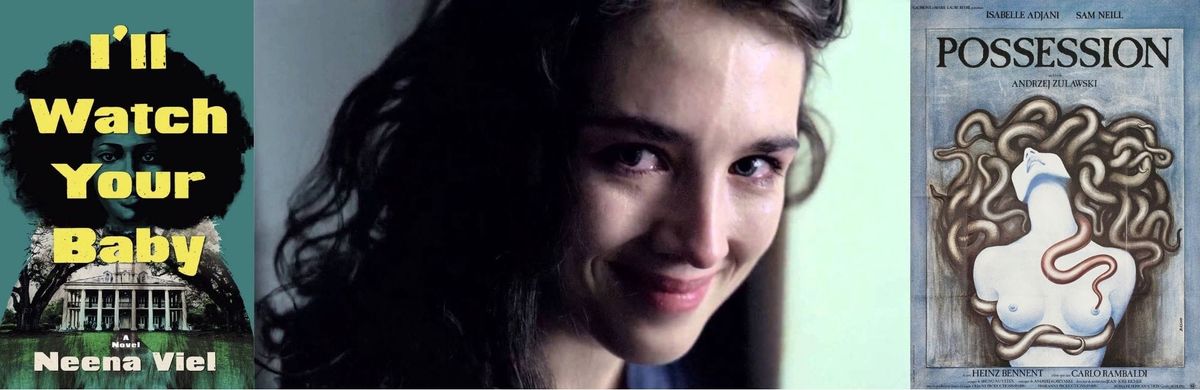
Fall is approaching, I've eaten approximately nine times my own body weight in beets, we've got a new litter of Wall Squirrels living above the bedroom, and Josh has introduced a new "hilarious" game into his rotation.
Sweat and dirt stung her eyes, but she kept them open, watching the stars and seething flies and crumbling dark soil, her resentment spurting with her blood until two truths crystalized:
She was dying in red.
But she'd be damned if she was the only one.
—I'll Watch Your Baby
I'll Watch Your Baby
Neena Viel, 2026
1974, Chicago. Lottie Turner has enriched herself via less-than-legal methods—including stealing children and selling them to adoptive parents—for decades, and the authorities are getting ever closer to making charges stick.
1994, St. Louis. Bless Stewart, survivor of a childhood of emotional abuse and neglect, is criss-crossing the country with her chosen family of scammers and thieves. A job goes wrong, a man is left dead, and the crew ends up in Tennessee. They hole up in a moldering plantation house to sit tight while they wait for some insurance fraud to bear fruit—there's an old lady still living there, but she's sick and frail and doesn't pose any sort of threat. (<--cue literally everyone yelling OH NOOOOOOOOOO)
It's never good when the scary old lady in a hoarder house is surrounded by a salt circle.
It's even worse when you only notice the salt circle AFTER you break it.
I'll Watch Your Baby is a horror novel on multiple fronts. It's a full-bore horror novel with possession and supernatural doings, lots of unpleasant liquids and endless clouds of whiteflies. The physical and mental trauma is visceral; you can feel the torn muscles, bramble scratches, the violation of nonconsensual telepathy. Everything has stakes. And it features my favorite sort of ghost—one who goes from tragedy in life to fury in death.
It's a horror novel on a personal level, of the realization that you've given love and trust to people who don't deserve it. Of living your life longing for love and connection, finally finding it, and then learning that it's all a lie. Being betrayed by people who'd promised to always have your back.
Also on the personal level, it draws parallels between possession and abuse—here's Lottie, putting the blame on herself for what the entity has done, rather than on the entity itself:
Filly's family would be intact if I'd never talked to her.
She wouldn't have gotten possessed.
It's a horror novel about the history of America, grounded in chattel slavery, generational trauma, the story of Linda Taylor, and the rise of Ronald Reagan. Viel covers territory from reparations being paid to slaveowners rather than the enslaved, to the continuing practice of people tying themselves into logic pretzels to defend holding plantation weddings. (Bonus: capitalism also takes some strays, and for a book that contends with such heavy topics, it's surprisingly funny.)
The two leads, Lottie and Bless, are messy and complicated and well-drawn. And it features the best sort of antagonist—or two antagonists, really—who are entirely justified in their rage, if maybe not their actions. As I know I've said before, my favorite ghost stories are about grief—while there's much more anger on the surface here, I'd argue that the foundation is grief. Grief for the harm people do to one another, for the futures so many people should have had, for the harm that is still being done now.
It's clear-eyed about the past and the future. It's a satisfying, cathartic burn-it-down narrative, but the burn-it-all-down is rooted in heart, not nihilism.
I think I only just escaped that film with my sanity barely intact. —Sam Neill, on Possession (1981)
Possession
Andrzej Żuławski, 1981
We lost Sam Neill last month, and I'm still feeling it. So I decided to finally, finally watch Possession, which I'd put off for ages because I knew it had a reputation for being sonically aggressive, and just A LOT in general. And while there is definitely a whole lot of screaming, and it is absolutely A LOT, I loved it.
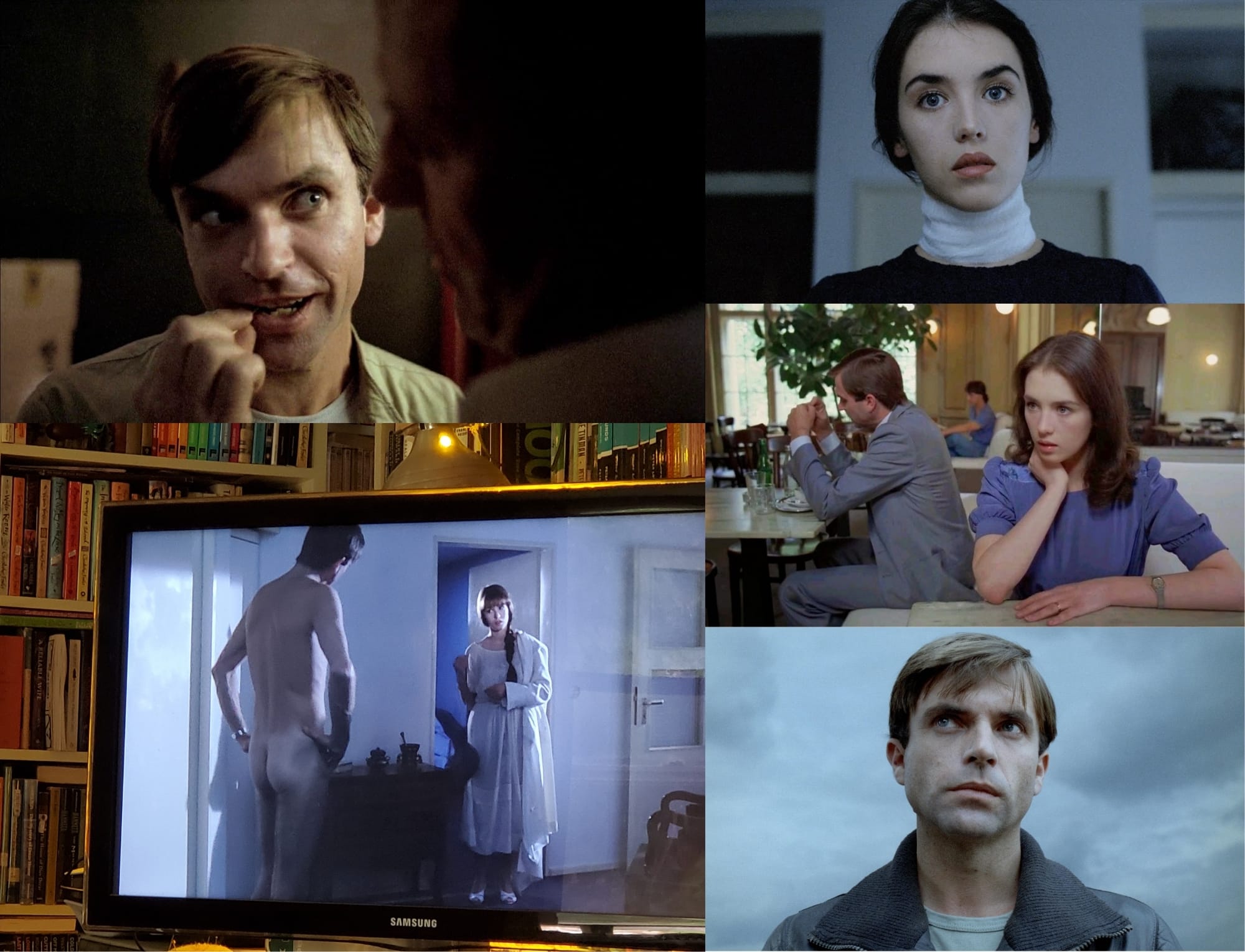
It should be noted up top: I went in for Sam Neill and he was absolutely wonderful and committed (and, you know, showed his butt), but I fully understand why all of the awards attention was focused on Adjani's performance. Because she is incredible.
It's a divorce movie set in West Berlin. But also a horror movie. And not just, like, metaphorical relationship horror, but a literal creature feature with effects by Carlo Rambaldi. Also there are doppelgängers.
Sam Neill comes home after a lengthy time away doing spy stuff to find that his wife, Isabelle Adjani, is over it and wants a divorce. Let's just say that he does not take the news with grace, especially when he finds out that she's been having an affair. But everything is waaaayyyyyyyy more complicated than that and that's WITHOUT bringing in the fact that their son's teacher is ALSO played by Isabelle Adjani, but in blink-blink-let-me-do-your-dishes-doe-eyes-for-the-patriarchy mode.
Given this movie's reputation—do not, do not, do not watch the famous subway scene out of context, I think you need to see it as part of the whole to get the full effect—I did not expect the film to be as darkly funny as it is? I spent the entire runtime alternating between laughing out loud, sitting in shock with an unhinged jaw, and moaning OH MY GOD SAM WHAT ARE YOU DOING OF COURSE SHE WANTS TO LEAVE YOU, YOU ARE SO FRUSTRATING THAT SHE LITERALLY JUST TRIED TO CUT HER OWN THROAT WITH AN ELECTRIC KNIFE
The director wrote it while he was in the middle of a terrible divorce, and while the movie mostly follows Neill's character, I did not read it as being sympathetic to him. Which made me hope that the director had some sort of self-awareness about his own culpability in his own situation? (Maybe??? ????? ??)
The sets are wonderful; the contrast of Adjani in ballet instructor mode (cold, controlled) with her in the subway (the opposite of that, times a billion) is so smart; there's some really delightfully deliberate blocking, like when our central couple meets in a cafe to talk things out & sit at separate tables not facing each other; setting a divorce story in a divided city, also so smart. Obviously the title works in a few different ways. And they have a really rad orange phone in their apartment that made me long for the days of landlines.
More soon, I am rusty.